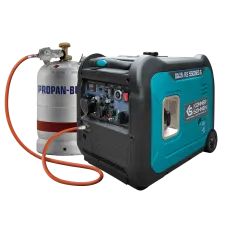
Dual‑fuel generators are power systems designed to operate on two different fuels—most commonly diesel and natural gas (or propane). They automatically blend or switch fuels to produce electricity, giving users greater flexibility, fuel security, and often lower operating costs compared with single‑fuel units.
In typical operation, natural gas (or propane) is used as the primary fuel, while a small amount of diesel is injected as a “pilot” to initiate combustion in the engine. If the gas supply is interrupted or unavailable, the generator can continue running on 100% diesel, helping maintain power continuity in critical applications.
Key benefits include reduced fuel expense when gas is cheaper than diesel, lower particulate and smoke emissions when running on gas‑heavy mixtures, and improved resilience during fuel supply disruptions. Dual‑fuel generators are widely used in industrial sites, remote operations, data centers, hospitals, and commercial facilities where reliability and cost control are priorities. They are available in standby, prime, and continuous‑duty configurations, with control systems that manage fuel ratios, monitor performance, and ensure stable output under varying loads.